



LOGISTAR’s objectives are:
- To increase by 10% the load factors of freight vehicles derived from the optimization techniques applied to freight deliveries planning.
- To shorten by 10% the delivery routes thanks to applying planning of optimal routes relying on synchromodality, being continuously updated in case of disruption.
- To increase the reliability and efficiency of logistics services by predicting events and incidents affecting the supply chain and by providing alternative routes in real-time to these disruptions.
- To facilitate the management of logistic operations by providing real-time supply chain visibility through dashboards not only displaying information but also showing deviations, alerts or recommendations to take actions.
- To boost horizontal collaboration among logistics agents focusing on full truck load (FTL) backhaul opportunities, consolidation of less than truckload (LTL) deliveries, supply chain collaboration and synchromodal opportunities.
- To increase the visibility of the delivery derived from the use of sensors to monitor the goods shipped and boosting to share logistic data and information among agents.
- To promote the sharing of open data in the logistics sector by promoting the benefits of collaboration and Big Data analytics across stakeholders.
- To enable new market opportunities on the logistic information services sector, by developing new business models focused on data and high value service delivery and exploring concepts such as “sharing” rather than “owning” transport assets. The policy and legal dimension will also be studied.
The project will be tested in 3 uses cases with different stakeholders of the logistic value chain, such as 4/5PL – Logistic Service Provider, Infrastructure manager and FMCG -Fast Moving Consumer Goods- manufacturers.
Living lab 1 – backhauling and co-loading (nestlé & pladis)
NESTLÉ and PLADIS have special interest on continuing previous research activities on the domain models of horizontal and co-loading collaboration, having reduced the running of empty vehicles by 270,000 kilometres per year since 2007. Currently there is a lack of a global view of the operations, which can lead to missed opportunities of collaboration. LOGISTAR will be fed with real information on different logistic operations in the area of distribution and warehousing of NESTLÉ and PLADIS in the UK. This testing case will be focused on showing how the information delivered by the decision-making tool developed in LOGISTAR can improve the backhauling management (the practice of not sending the cargo trucks back empty rather having them take some cargo back to the original source). The partners involved in this use case will be aware of all the legal aspects (in particular, anti-competition laws), and there may be a need for a trustee in place to enable companies to work collaboratively.
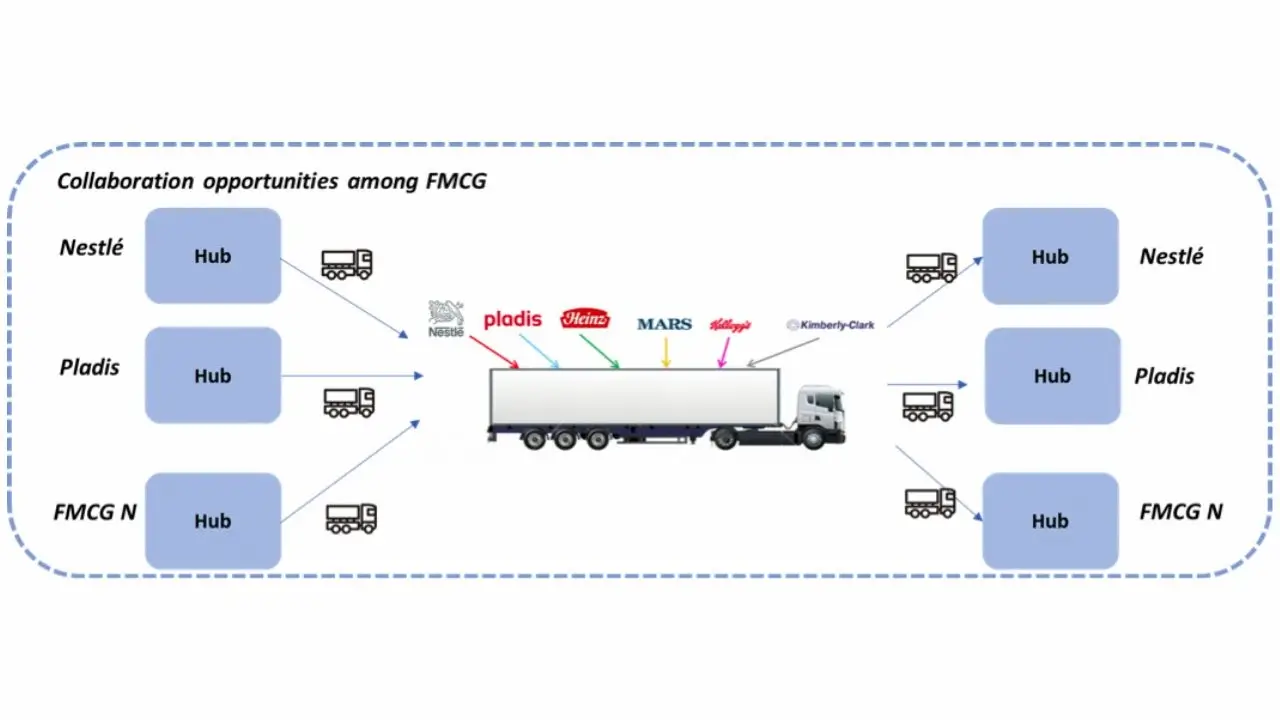
Location: The use case will take place in the logistics hubs of NESTLÉ in Bardon and PLADIS in Ashby de la Zouch which are both located near to each other in the middle of the UK.
The main actors involved: Partners: FMCG (NESTLÉ and PLADIS); Carrier Various LSP’s plus own fleet
Living lab 2 – synchromodality
Interporto of Verona (Italy) with 130 enterprises in their facilities, over 2.5M m2 of warehouses & terminals, has regular route connections by rail, sea and road on 3 TENT-T corridors (Baltic-Adriatic, Mediterranean, Scandinavian- Mediterranean) with a specific focus on North-South axis (Brenner Pass).
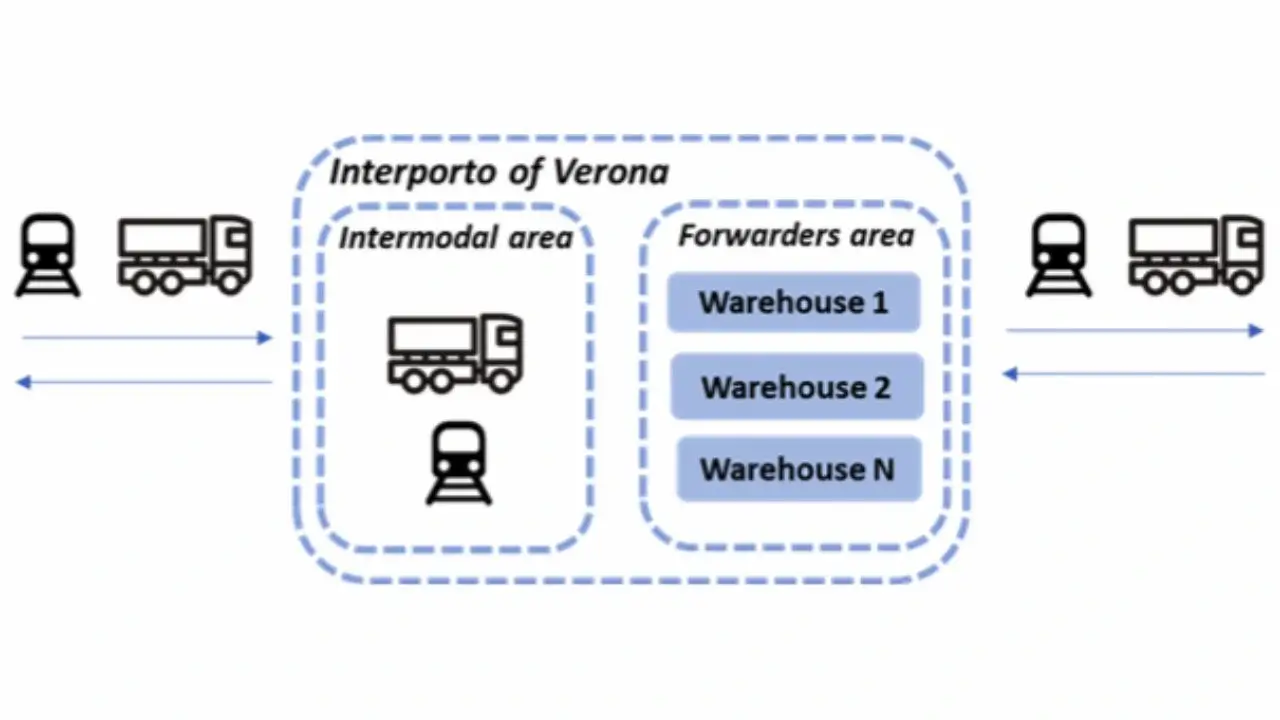
LOGISTAR system will be tested on the goods being transported between hubs, directly involving Interporto of Verona, and studying the various processes in the terminal, such as loading/ unloading, transshipment, bundling, among others. This testing case will be focused on showing how the information delivered by the decision-making tool developed in LOGISTAR can improve the logistic operations increasing the synchromodality. It’s remarkable the high commitment of Interporto of Verona for promoting the synchromodality, having in 2016 16.294 trains/year (54 per day); 13.452 intermodal trains (44 per day), having weekly routes, from/to Munchen, Hamburg, Hannover, Leipzig, Bremen, among others. In 2016, 28 million tons of goods were transported, 20 million by road and 8 million by rail.
Living lab 3 – real time logistics in chemical industries
CHEP has identified that there is a huge waste which is generated due to the waiting times at loading and unloading locations. In many occasions (depending on the length of haulage) trucks and drivers lose up to 40 % of their daily shift just waiting to get loaded or unloaded.
The Living Lab will be based at the Service Center in Fuenlabrada (Madrid area, Spain). Here CHEP manages daily around 50 loading and unloading operations moving around 32.000 pallets daily. At this location there are 6 areas for loading and unloading operations. Here, CHEP uses a static appointment scheduling tool as part of our BluJay TMS system which causes important delays and frustration among our driver community.
CHEP has experienced that multi-party planning and collaboration can only be successful if vehicle timeslots are respected and turnaround time at the pallet depots are minimized. This is only possible if live and accurate vehicle ETA (Estimated Time of Arrival) data is integrated with the network planning system.
In this new Living Lab, CHEP wants to develop and test the use of its real-time positioning and order planning data to feed the LOGISTAR system, so as to calculate an accurate ETA of its vehicles and enable re-planning between different network nodes. This Living Lab will address and prevent cascading transport delays between the pallet network nodes that currently are a big impediment for LTL horizontal collaboration (i.e. freight consolidation) at the hub site.
Consortium
The LOGISTAR consortium consists of 15 organizations from eight different European countries (Spain, Germany, United Kingdom, Belgium, Italy, Ireland, Austria and Serbia) formed by universities and research centres, technology and IT services developers, consultancy and logistic actors.
Lead partner:
- DeustoTech conducts applied and basic research for the development of novel ICTs application. DeustoTech-Mobility researches on the field of Artificial Intelligent algorithms focussed on prediction and optimisation, delivering i.e. multimodal route planners, traffic congestion prediction systems.
- The group that will participate in LOGISTAR is the Optimisation and Decision Analytics group in the Insight Centre for Data Analytics, in the School of Computer Science and IT. Insight is Ireland’s national research centre in data analytics and applied artificial intelligence.
- CSIC is the largest public research institution in Spain. One of its institutes, IIIA-CSIC, carries out very high quality research in Artificial Intelligence (Reasoning and Logic, Learning Systems, Multiagent Systems).
- Serbian company focused on creating Internet of Things based solutions for diverse domains (e.g. smart city, smart agriculture) for B2B market.
- Austrian SME that offers ICT consulting services and solutions in the field of semantic integration and data management.
- British company that provides supply-chain strategy modelling and logistics consultancy to a wide range of commercial and government organisations.
- MDS Transmodal is a consultancy which provides analysis and advice on strategic, commercial and economic issues mainly related to freight transport and logistics.
- Leading European system software manufacturer with the most complete business process and service platform to help organizations to achieve their business objectives faster.
- An international software and consulting company.dbh offers ideal solutions in the areas of customs clearance and export control, freight forwarding, SAP®-Consulting and port community systems.
- SME that operates in Geographic Information Systems (GIS) and more generally, in the field of geospatial computer applications in some market areas like environment, utilities and transportation.
- Ahlers is a 4PL Belgian logistics solution provider. Its new division, ASNIA (Ahlers Supply Network Innovation & Analytics), is specialized in logistics optimization, supply network innovation, horizontal collaboration and big data analytics.
- Consorzio ZAILOG is the R&D department of Interporto Quadrante Europa located in the intersection between the Scan-Med and Med Ten- T Corridor. The freight village of Verona is the main Italian intermodal hub. Shares the knowledge of combined transport and improves new business models in the Interporto area.
- Nestlé is the world’s largest food and beverage company. Particularly, Nestlé UK has 20 sites and is focused in working to improve energy efficiency and reduce emissions.
- PLADIS is a global biscuit, chocolate and confectionery company. In LOGISTAR it participates through its company UNITED BISCUITS UK LTD.
- Codognotto Group focuses on integrated logistics and has dedicated staff that study storage, handling and distribution network.
- CHEP is a renting company, specialized in supplying pallets, but also containers, RPCs, bins, and trays. Every day CHEP is delivering, collecting and relocating pallets from and to 240 Service Centers in Europe.

Alejandro Javier López
Author at LOGISTAR
Alejandro Javier López define la estrategia editorial del sitio y supervisa la calidad de todo el contenido publicado.

Mateo Ignacio Fernández
Editor at LOGISTAR
Mateo Ignacio Fernández se encarga de desarrollar y ejecutar las estrategias de crecimiento del sitio web.